
Request a quote

Owner support

Find installation, care, warranty registration, documentation and after-sales support. Submit the vehicle, product identification and issue details so the service team can review the specific configuration.

Owner support

What to look for?

Frequently Asked Questions

Frequently Asked Questions

Support starts with understanding the question and continues through installation and use. Find relevant guidance below, then collect the model, vehicle details and assistance needed. Keep follow-up information in the same enquiry record.

Please use the vehicle fitment page to submit the brand, model, year and braking system information. Hole spacing, center hole, ET, load and caliper space still need to be reviewed by an authorized shop before final installation.
Download Centre

Guides and Documents

Documents provide a reference for use and future discussions. Keep the version that matches your product. If a step is unclear, identify the document and section so the team can review the same information.

01 / PDF

Installation and Torque Guide

PDF · 9 pages

Before installation, check the vehicle, wheel, tyre, brakes and fasteners as one assembly. This guide covers identification, mounting-surface cleaning and trial fit, including centring, fastener seats and engagement, and clearance to brakes and suspension.

It explains staged cross-pattern tightening, torque tools, final inspection and the first recheck, with an installation record. It gives no universal torque value: confirm the value, unit and dry or lubricated condition from the applicable vehicle, LSW order and fastener documents.

Download PDF
02 / PDF

Wheel Care Manual

PDF · 9 pages

Care starts with identifying the finish. The manual distinguishes coated, clear-coated, brushed, anodised, polished and matte surfaces. Its routine sequence covers cooling, pre-rinsing, product selection, soft contact, cleaning by zone, rinsing and drying, alongside chemicals and tools to avoid.

Separate guidance covers winter salt, coastal exposure and high brake temperatures, plus assessment of scratches, corrosion and continuing air loss. It also covers off-vehicle cleaning, storage and care records. Care does not replace structural inspection; stop use for cracks or deformation and seek professional assessment.

Download PDF
03 / PDF

Warranty Policy Guide

PDF · 7 pages

This guide explains the evidence needed for warranty assessment and distinguishes manufacturing concerns from wear, impact, installation or fitment issues and unauthorised changes. Match each wheel’s model, serial number, purchase evidence, installation record and photographs, preserving its original condition and event history.

The process covers intake, completeness review, preliminary assessment, physical inspection where needed and a conclusion. Registration does not approve a claim. Scope, period, cost and remedy depend on valid order and warranty documents and applicable rules. Obtain return authorisation and confirm the destination and packaging before shipping.

Download PDF

Long-term wheel care and torque checks

The first re-inspection after installation is just the starting point: changing tires in different seasons, before and after long-distance use and regular inspections constitute the maintenance rhythm of forged wheels in long-term use.

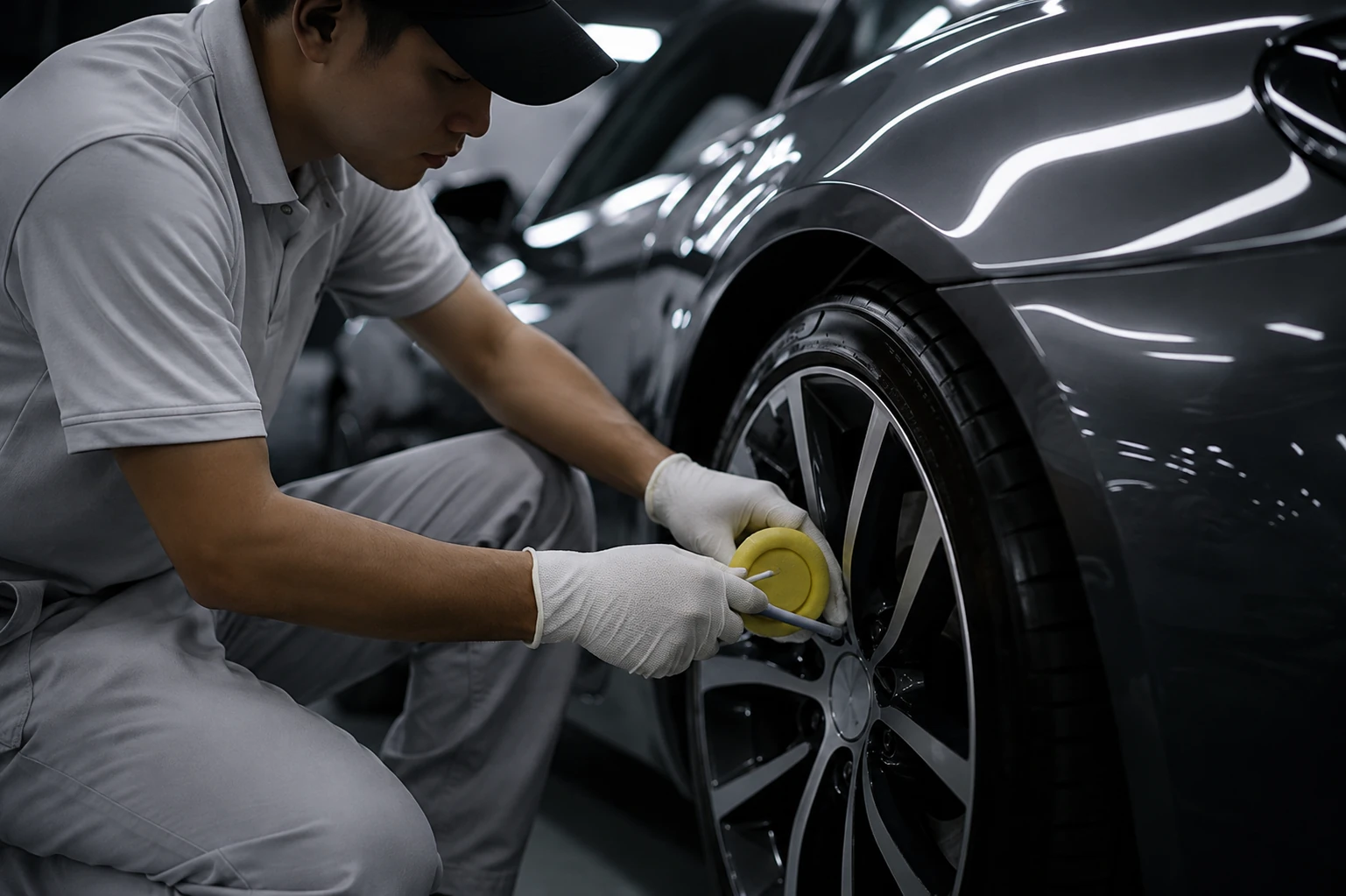
Professional technicians conduct tightening torque review and routine maintenance on vehicle forged wheels

After the first re-inspection, what other nodes need attention?

Completing the first tightening re-inspection according to the instructions after installation is only the starting point of the long-term use cycle. It is a reasonable time to recheck the tightening torque and wheel status before and after changing tires during seasonal changes, tire adjustment, long-distance or heavy-duty use, and every time the wheel is disassembled for maintenance. Any disassembly or installation of the wheel should be considered a new "installation" and the tightening and re-inspection process should be completed according to the official instructions, rather than assuming that the previous status is still valid.

Check items that are easily overlooked when changing tires seasonally

During the tire replacement process, in addition to replacing the tire, it is also a suitable time to check the condition of the wheel: including whether there is corrosion or damage on the bolt holes and mounting surface, whether the valve and tire pressure monitoring sensor are normal, and whether there are new signs of bumps or cracks on the wheel surface. When storing seasonal tire hub assemblies, avoid long-term moisture or direct contact with the ground to reduce the risk of corrosion on the mounting surface.

Review before and after long-distance or heavy-duty use

Before and after long-distance self-driving, track experience, or long-term full-load use, it is recommended to double-check the tightening torque and tire pressure, especially after experiencing large temperature differences or harsh road conditions. Continuous high temperature and high-frequency vibration may accelerate the change of fastener status. Timely review can help detect abnormalities before the problem expands.

Clear vehicle information makes enquiries more useful.

Before an enquiry, gather the make, model, year and trim, along with current wheel and tire sizes. Include brake, suspension or ride-height changes. If you already have a preferred LSW model, color reference or fitted image, share it to help explain the result you want.

From the first enquiry to everyday ownership.

For a quotation, also confirm quantity, front and rear combinations, finish, required accessories and destination. Different needs may involve different configurations and delivery arrangements; the formally agreed details define the scope. A complete brief reduces back-and-forth and supports later checks.

Describe the issue clearly so support starts with the facts.

When contacting support, prepare the model, purchase channel and date, readable product markings and both overall and close-up photographs. Explain when the issue first appeared, the vehicle’s condition at that time and any recent tire, brake or suspension work to provide context for review.

Keep proof of purchase and confirmed specifications to connect the product with its order. Warranty, accessories and any proposed resolution should be checked against the specific product and formal documents. Use the same enquiry reference for additional information to keep the conversation connected.

Need More Help?

Didn’t find the answer?

Having the product serial number, proof of purchase, and photos of the problem ready can help the support team make a quicker determination.

Contact the after-sales team