

Confirm the Specification Before Removing the Existing Wheels
Before installation, the workshop should confirm the wheel model, size, PCD, centre bore, fastener seat type, tyre specification, brake clearance and load requirement, and inspect the condition of the wheels and accessories. Any specification that relies on spacers, spigot rings or special fasteners should be clearly documented before work begins.
Fastening Data Is Not One-Size-Fits-All
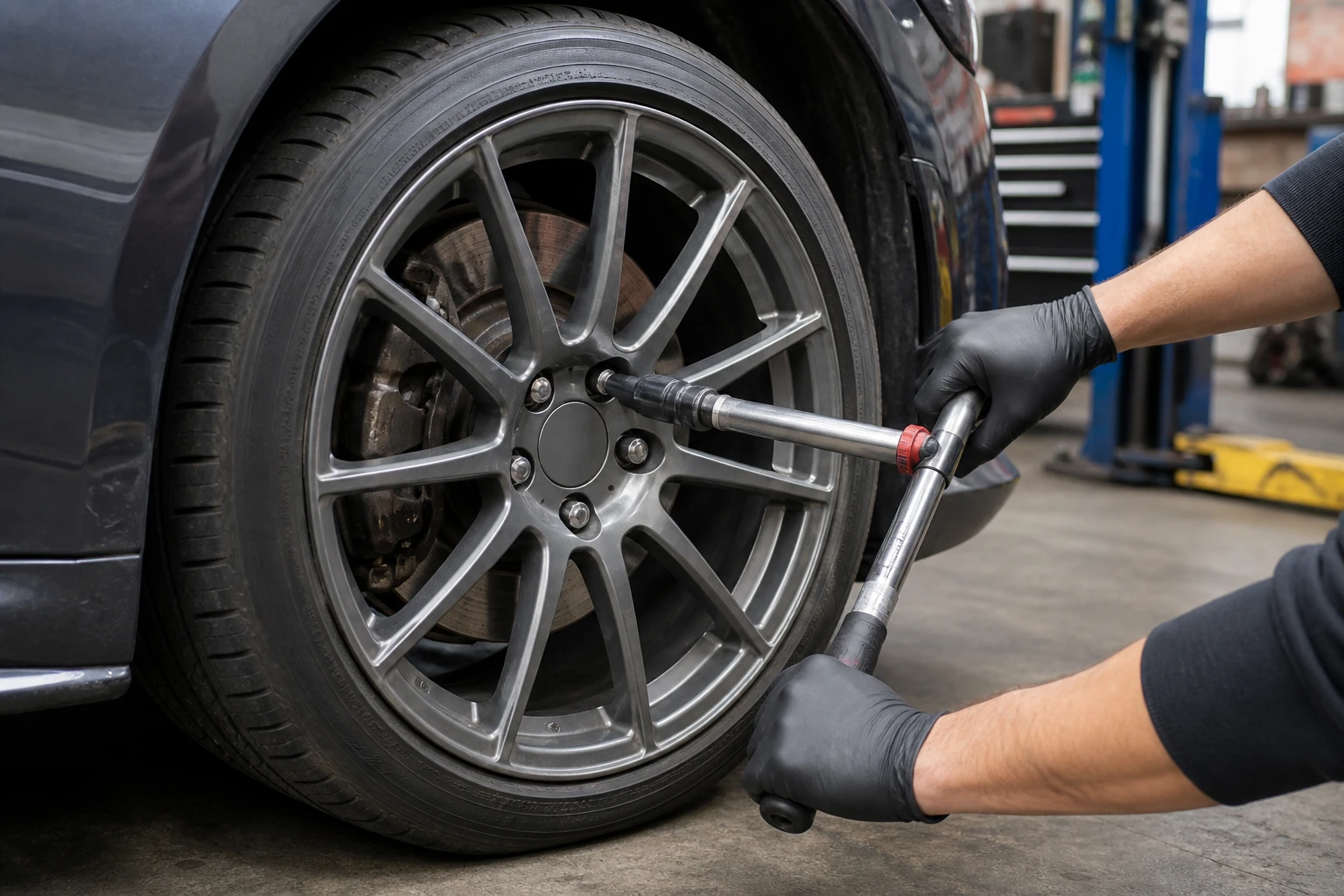
Torque, tightening sequence and reinspection requirements must follow the formal instructions issued for the vehicle, wheel and fasteners. This website does not provide a universal torque value across vehicle applications. Calibrated tools, clean mounting faces and recorded installation data are more reliable than a remembered “standard” figure.
Complete Reinspection as Formally Specified
Post-installation reinspection mileage, inspection items and corrective actions should follow the formal product and workshop instructions. Key checks include fastener condition, unusual vibration or noise, tyre contact, inflation pressure and visible damage. If anything abnormal is found, stop high-speed or heavy-load use and contact a qualified service facility.
Routine Cleaning Is Also an Inspection Opportunity
Use cleaning methods suitable for the finish and avoid unverified strong acids, alkalis and abrasive tools. While cleaning, inspect the rim, spokes, valve stems, fasteners and tyres. Record any new impact marks, corrosion or deformation and have a qualified professional determine whether further inspection is required.
Brake dust contains a high proportion of iron friction particles. If they adhere to the wheel surface for a long time, they may have electrochemical interactions with the aluminum alloy substrate or coating, accelerating local corrosion or coating failure. Promptly flushing the inside of the rim, the gaps between the wheel spokes and other places where dust is likely to accumulate is more effective than waiting until the rust spots are visible to the naked eye.
- Keep product number, construction record and purchase receipt
- Check tightening and air pressure according to official instructions
- Avoid using aggressive cleaning agents when the wheel is hot
- Check as soon as possible after impact or sustained vibration
The tire pressure monitoring system also needs to be reviewed
Most vehicles equipped with tire pressure monitoring systems (TPMS) need to relearn or re-pair the sensors after replacing the wheel. The specific process varies depending on the vehicle model and system type (direct or indirect). The installation store should confirm that the monitoring system display is normal after the replacement, and complete learning or calibration according to the vehicle instructions to avoid long-term instrument alarms or monitoring failures.
If the wheel needs to use a special valve seat or adapter for the sensor, the air tightness and speed matching should be confirmed at the same time. Such details are usually not reflected in the product description of the wheel itself, but you need to refer to the sensor supplier and the vehicle manufacturer's information.
Next Step