

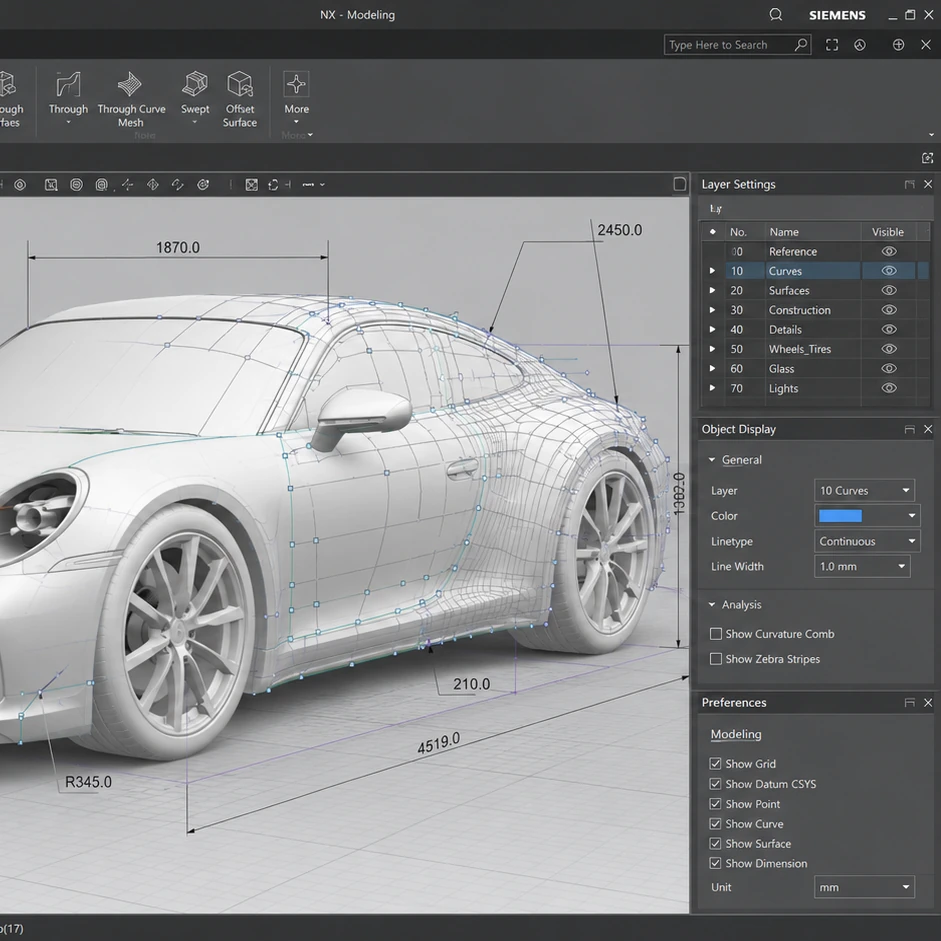
Establish the Vehicle Baseline First
Vehicle parameterisation involves more than entering a model name. Model year, generation, exact variant, drivetrain, original tyres, brake system, axle loads and suspension condition can all change the available space. The vehicle context must therefore be organised into verifiable inputs first.
Check Mounting and Clearance Together
PCD and centre bore define the basic mounting interface. Wheel width and ET determine the wheel’s position relative to the suspension and fender. Tyre diameter and section width affect the dynamic envelope, while the caliper profile requires a 2D template or 3D data. No single parameter represents complete fitment.
- PCD, center hole and fastening method
- Wheel width, ET and tire specifications
- Caliper, suspension and wheel arch clearance
- Vehicle axle load and target usage scenarios
Parameter Changes Require a Linked Review
When wheel width, ET, tyres or brake configuration changes, inner and outer positions and dynamic clearances change with them. A parametric model keeps these variables linked so engineers can compare specifications efficiently rather than relying on isolated rules of thumb.
Produce an Actionable Engineering Context
The final specification should record the vehicle, wheel, tyre, brake and operating conditions and identify every item that still requires measurement on the vehicle or template review. The 3D modelling interface illustrates a coordinated validation method; a formal fitment conclusion requires engineering review of the specific vehicle and final wheel specification.
The relationship between load index and tire load
The load capacity of wheels and tires is usually given in the form of a load index or load rating, which needs to be checked with the vehicle's axle load, passenger and cargo capacity, rather than just comparing the wheel's nominal size. After the modified wheel size changes, the actual installed tire model will also change, and its load index needs to be no less than the minimum requirements specified by the original manufacturer or vehicle manufacturer.
For vehicles such as pickup trucks and off-road vehicles that are often fully loaded or used for towing, load verification is particularly important; focusing only on appearance dimensions and offset, while ignoring tire load matching, may bring risks under sustained heavy load conditions.
Next Step