

Alloy grade and temper are different specifications
6061 is a heat-treatable 6xxx-series aluminium alloy grade. T6 describes a condition achieved through solution heat treatment and artificial ageing. The grade identifies the alloy system; the temper describes the heat-treatment route. A “6061-T6” label on a page does not replace batch material certification, heat-treatment records or test results from finished-product samples.
Forging controls how the material flows
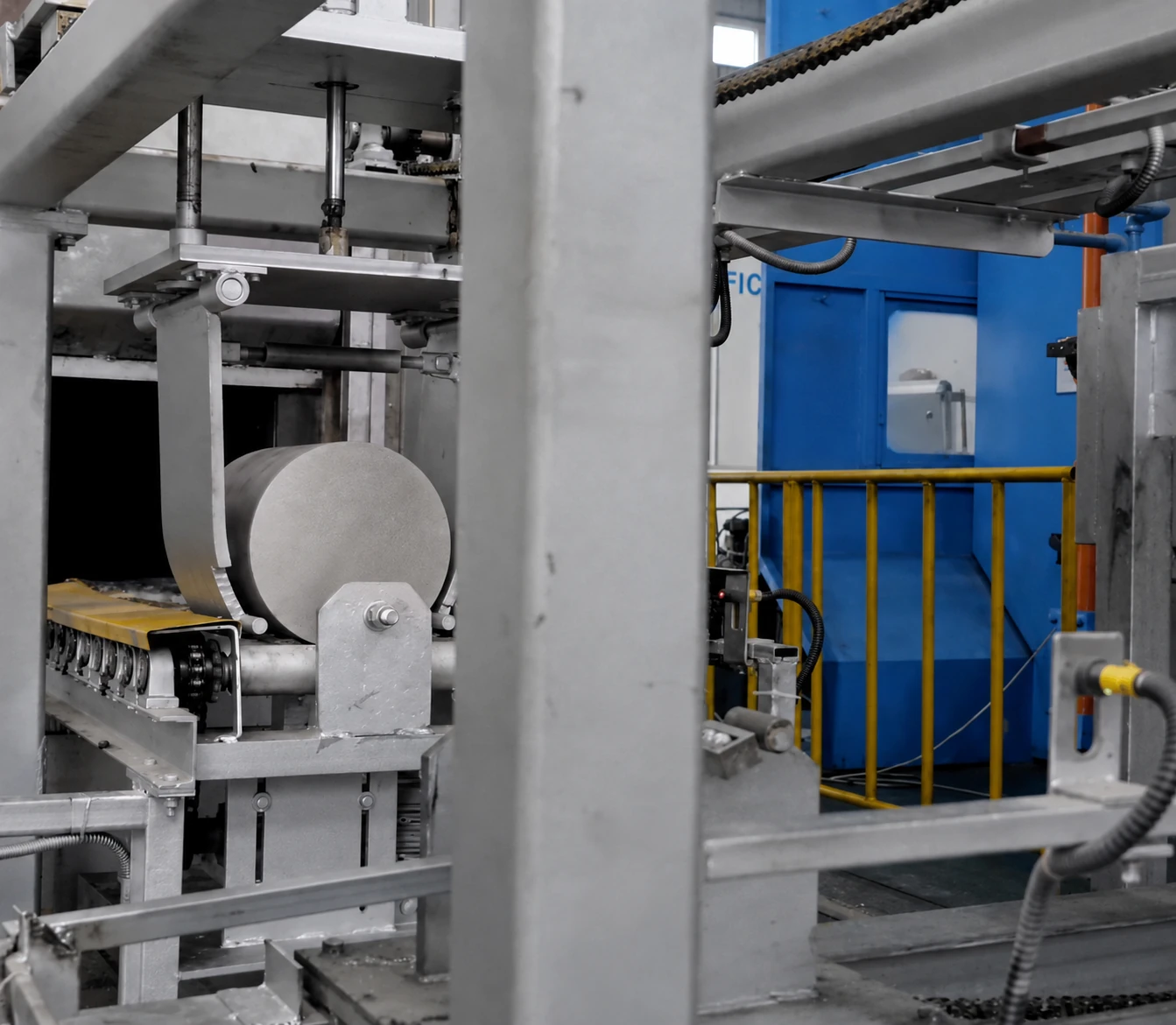
Under controlled temperature, tooling and pressure, the billet undergoes plastic deformation to form the rough geometry of the hub, spokes and rim. The process is intended to fill that geometry consistently and retain the correct machining allowance—not to infer finished-wheel performance from a material name alone.
- Billet grade, specification and batch identification
- Heating, transfer and forging records
- Heat-treatment lot and temper confirmation
- Sampling location, specimen orientation and test report
The T6 Temper Must Be Confirmed by Process and Inspection
Solution treatment, quenching and artificial ageing influence microstructure and mechanical properties. The specific process window is a controlled manufacturing parameter. Any published claim should link the heat-treatment batch to hardness, tensile or other specified inspections. This article does not provide temperatures, times or performance figures unsupported by company records.
Material Conformity Does Not Establish Product Conformity
A material report addresses whether the raw material or specimen meets the stated requirement. The finished wheel still requires dimensional, visual and balance inspection and structural validation appropriate to its intended specification. A sound evidence chain traces the finished-product identifier back to material, process and inspection records. Production images show the manufacturing setting only; they do not establish conformity for a particular batch.
Why 6 series aluminum alloy is the common choice for forged wheels?
6 series (Al-Mg-Si) aluminum alloy is widely used in structural parts that require formability and comprehensive performance due to its balance of forgeability, heat treatment strengthening ability and corrosion resistance. Forged wheels are one of the typical applications. Compared with some 7 series (Al-Zn-Mg-Cu) high-strength aluminum alloys, the strength level of 6 series alloys is usually lower, but the weldability, corrosion resistance and comprehensive forming process adaptability are more advantageous, and the supply chain and processing experience are also more mature.
Which aluminum alloy grade to choose for a specific project needs to comprehensively consider the strength requirements, forming process, cost and long-term corrosion resistance performance. There is no "optimal grade" that is true for all products, and the final product drawings and material specifications shall prevail.
Next Step